Speakers

James Naylor
Ross Coomber
Sashin Ahuja
Tony Young

Justin Green

Helen Compton
Axel Sylvan

Anisa Haashi

Professor Mark Wilkinson

Keynote Presentation
New ideas and suggestions, where to next?
Innovation, how to develop an innovative AI technology to improve care of patients Moderators - James Naylor & Ross Coomber
Machine learning and Total Knee Replacement - Rory Ormiston
Machine learning and Adolescent Idiopathic Scoliosis - Sashin Ahuja
A blank canvas - Tony Young
Ideas Incubator – round table discussion of how to take ideas forward
Suggestions from: Tony Young, Justin Green, Oli Pearce, Helen Compton, Axel Sylvan Anisa Haash, Mark Wilkinson, Jordan Tsigarides

James Naylor is a Senior Marketing Manager for Johnson & Johnson MedTech and works across digital technology and Hips. James has been in Orthopaedics as part of Sales or Marketing for more than 20 years starting as a sales rep and moving through to his current role as a Strategic Marketer for the Global Group. In his current role James is responsible for the management and delivery of digital projects within Hips and owns the future roadmaps for digital technology Globally for Hips. James’ role involves sourcing companies and products that fit the roadmaps and onboarding those companies as valued partners.

Justin is the CEO and co-founder of OPCI, a MedTech startup using AI to support elective surgery. He previously trained as an orthopaedic registrar and clinical data scientist, combining hands-on clinical expertise with a deep understanding of data-driven healthcare innovation. He was awarded a National Clinical Research Fellowship in 2022, exploring the application of digital technologies in determining longitudinal outcomes in hip surgery and is currently reading for a PhD in Artificial Intelligence at Newcastle University, where his interests lie in ethics and responsible application of AI in healthcare. Justin co-leads the Musculoskeletal interest group at The Alan Turing Institute and continues to act as a Clinical Safety Officer in addition to contributing to the NortHFutures Digital Skills collaborative, supporting education and training of health and social care professionals in digital technology across Northeast England.

Helen joined the NIHR CC in 2016 to lead on stakeholder engagement activity with the charity and MedTech communities and provide leadership and delivery across several high profile strategic and operational projects across NIHR.
Helen engages with SMEs, clinicians and charities to support MedTech innovators access the NIHR and wider life sciences ecosystem.
Helen gained an extensive background working at the science-policy interface in Defra (>9 yrs) across several high-profile government programmes. She commissioned R&D programmatic evidence that supported changes in both UK policy and international cooperation and has experience synergising research activity across government departments for domestic and international reporting. Helen has developed evidence supporting several national government strategies and presented evidence-based findings at all organisational levels and internationally to the OECD.
Whilst at the National Physical Laboratory Helen developed extensive touchpoints across the UK public research infrastructure primarily around health and the sectors that impinge on it. She contributed to a national measurement strategy for the UK on behalf of government and helped government prioritise its chemical and biological metrology research funding to support emerging areas of UK measurement need necessary to support industrial growth.
Helen is interested in health innovation and MedTech and has advisory roles in:
• Board member to CW Innovation, the partnership between Chelsea and Westminster NHS Foundation Trust and the Trust’s hospital charity, CW+
• Trustee Orthopaedic Research UK

Anisa is a medical student intercalating in a Master’s in MedTech, Innovation, and Entrepreneurship at King’s College London. With a strong focus on advancing surgical innovation, Anisa has conducted research on bias in AI-based segmentation, the use of virtual reality to manage pain in post-operative patients and is currently exploring the application of computer vision in predicting knee replacement failure. Passionate about leadership and collaboration, Anisa has served as President of the KCL Women in Surgery Society and was a founding Committee Member of the KCL Surgical Innovation Society.
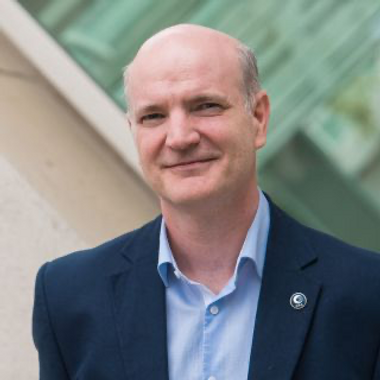
Professor Wilkinson's principal research interests are in the genetic and metabolic aspects of joint replacement, osteoarthritis, and other associated diseases. Professor Wilkinson is a key clinical collaborator in the Genetics of Osteoarthritis initiative. He and his collaborators have been instrumental in determining our current understanding of the genetic architecture of osteoarthritis. He conducted the first genome-wide scan into hip dysplasia, and into osteolysis and heterotopic ossification after hip replacement, He published the first study in humans to show that bisphosphonates may suppress bone loss after hip replacement and the first clinical trial to show that the human monoclonal antibody denosumab can inhibit osteolysis lesion activity. Other areas of research include exploration of the molecular mechanisms that underpin osteoarthritis development and identifying potential novel pharmacological strategies for its treatment. He has worked on the genetics of osteoarthritis has uncovered novel gene associations with severity and pattern of hip and knee OA, bone remodelling responses to disease, and hip shape. He also studied the systemic health effects of metal ion exposure after hip resurfacing has demonstrated effects on bone cells, cardiovascular, and other systems.
Professor Wilkinson’s principal funding sources are Versus Arthritis, NIHR, Wellcome, MRC, Royal College of Surgeons of England, Cavendish Foundation, John Charnley Trust and industry.

Dr Jordan Tsigarides is a Senior Clinical Fellow in Rheumatology (Cambridge University Hospitals) and Doctoral Research Fellow (University of East Anglia) currently researching closed-loop virtual reality (VR) systems utilising sensor-based technologies and artificial intelligence (AI). Jordan is also an organiser for the Turing’s Clinical AI Interest Group, British Society of Rheumatology’s AI SIG and the MRC’s Neurotechnology in Chronic Pain Network where he provides expertise related to AI in Rheumatology and immersive therapeutics in chronic pain. Jordan’s research aims to investigate how state-of-the-art technologies and cutting-edge techniques can support patients with musculoskeletal disease.