External Organisation
This lecture presents an overview of how the extended clinical team (ECT) functions in a complex tertiary care setup dealing with upper limb referrals. The team includes Consultant Surgeons, Registrars and Resident Doctors, with the extension of non-medical role of Advanced Clinical Practitioners (ACPs) and surgical care Practitioners( SCPs) who work in a coordinated collectively to ensure the best possible outcomes for each patient. This collaborative effort is pivotal in addressing the multi-faceted nature of orthopaedic care. Through regular case reviews and joint decision-making within the team, they ensure that each aspect of the patient's care is reviewed; from surgical planning to rehabilitation, all part of an integrated care package; leading to improved patient outcomes.
Course leader: Paul Banaszkiewicz and Amar Rangan
08.30 - 08.35: Amar Rangan, President BOA
Welcome and introduction to the Extended Clinical Team(ECT)
08.35-09.00: The Extended Clinical Team working within a subspeciality Upper Limb North Tees Hospital
Emma Tindall MFPCEd MSc ACP PGDip SCP, Surgical Care Practitioner Ortho,
University of North Tees Hospital
An SCP’s perspective of working within an extended surgical team
Richard Jeavons FRCS(Tr&Orth), Consultant Orthopaedic Surgeon,
University of North Tees Hospital
A consultant surgeon’s perspective on non-medical members of the surgical team
Nick Wei, Surgical trainee, University of North Tees Hospital
A surgical trainee’s experience of working with non-medical members of the extended surgical
team.
09.00-9.30: Recognition, governance, and supervision for Advanced Practice in T&O:
a Pragmatic Blueprint.
Professor Julian Barratt, Head of Centre for Advancing Practice Workforce,
University of North Tees Hospital
Training and Education, NHS England and Honorary Professor, School of Psychology,
Health and Clinical Sciences
Credentialing means a formal, evidence-based process by which an organisation confirms that
an individual is trained, competent and authorised to perform a defined set of activities within
an agreed scope of practice.
Credentialing typically includes
- Defined scope: the specific tasks/procedures/decisions the role is permitted to undertake
(and what is explicitly excluded).
- Eligibility criteria: baseline qualifications, registration (e.g., NMC/HCPC/GMC), mandatory
training, experience.
- Competency evidence: workplace-based assessments, logbook/case numbers
(where relevant), observed practice, reflective practice, appraisal evidence.
- Supervision framework: who signs off, level of supervision (direct/indirect),
escalation triggers, “hard stops.”
- Governance and accountability: documentation standards, audit/KPIs, incident review,
indemnity position.
09.30-10.00: Lynne Robertson-McPartlin SCP, Honorary Professor, School of Psychology,
Health and Clinical Sciences, Aston University
Diabetic foot service-the evolving role of SCP in a MDT set up
Diabetic foot care is a true multidisciplinary endeavour in which timely assessment
coordinated decision-making and continuity are critical to limb salvage.
Surgical Care Practitioners (SCPs) are increasingly central to this pathway,
supporting rapid triage, wound assessment, theatre coordination, post-operative
surveillance, and patient education.
This symposium explores how SCPs can work safely and effectively within the
MDT alongside orthopaedic surgeons, vascular teams, podiatry, diabetology, and microbiology.
It will define scope of practice, governance, and competencies, using real pathway examples to
show how SCP involvement can reduce delays to debridement, improve communication,
and support consistent follow-up while maintaining clear consultant oversight.
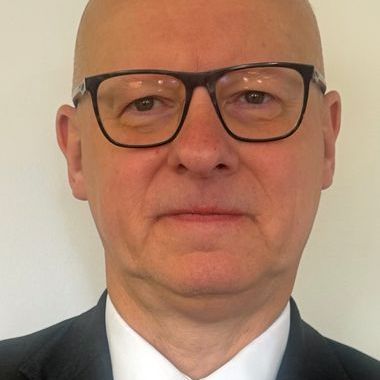
Paul Banaszkiewicz is a Consultant Trauma and Orthopaedic Surgeon at the Queen Elizabeth Hospital, Gateshead, specialising in hip and knee arthroplasty. He graduated from University of Glasgow, completed basic surgical training in the Merseyside Deanery, and undertook specialist registrar training on the North East of Scotland training programme.
He is currently a Trustee of the British Orthopaedic Association (BOA) and Chair of the BOA Education and Careers (EdCar) Committee, leading initiatives focused on professional development, mentoring, workforce support, and equity of opportunity across orthopaedics. He has helped develop national educational programmes including the BOA–BODS Clinical Directors course, UKITE, Ortho Update and Extended Clinical Team initiatives at BOA Congress.
Paul is Editor of the Journal of Trauma and Orthopaedics (JTO) and co-leads the TENDON study evaluating musculoskeletal education within UK medical schools. He has a particular interest in differential attainment, widening participation, and improving access to mentorship and career development within surgical training.
He is a Fellow of the Higher Education Academy, Fellow of the Academy of Medical Educators, and holds a Master’s degree in Medical Education from Newcastle University. He also serves as an Advisory Appointments Committee (AAC) member and Quality Assurance Assessor for the RCSEng.
As Visiting Professor at Northumbria University, Paul helps bridge academic research with practical clinical orthopaedic practice. He has supported the BOA Futures Leadership Programme, BOA Travelling Fellowships, and the educational activities of the British Orthopaedic Trainees Association (BOTA). He is also lead editor and author of three internationally recognised FRCS (Tr & Orth) textbooks, which have received several BMA Book Awards.
Paul has undertaken humanitarian orthopaedic work in Northern Iraq and remains committed to international collaboration, diversity, and inclusion within orthopaedics. Outside work, he enjoys running, skiing, gardening, and supporting Burnley F.C..
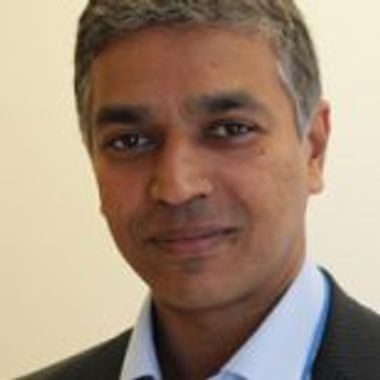
Prof Amar Rangan holds the Mary Kinross Trust and Royal College of Surgeons Chair at Hull York Medical School (HYMS) and Department of Health Sciences, University of York.
He is a specialist shoulder and elbow surgeon at South Tees Hospitals NHS Foundation Trust in Middlesbrough, providing district and tertiary services in his specialty.
He also holds a full professorship with the faculty of medical sciences and NDORMS, University of Oxford.
Amar has held key national leadership roles: President of the British Elbow and Shoulder Society, trustee of the British Orthopaedic Association, and surgeon member of the National Joint Registry Steering Committee.
Amar is a designated supervisor for HYMS integrated academic training and supervises pre-doctoral and doctoral studentships.
He is fellowship director for the nationally accredited shoulder and elbow fellowship at South Tees Hospitals and is course director for the postgraduate MCh(Orth) programme in Teesside.
Amar leads a programme of clinical and translational research, including NIHR funded multi-centre clinical trials.
He has published widely in trauma and orthopaedics, particularly in shoulder and elbow surgery, where his work has influenced clinical practice, national guidelines, and policy.
He is chair of MedConnectNorth and is a member of the NIHR i4i Challenge Awards Committee.
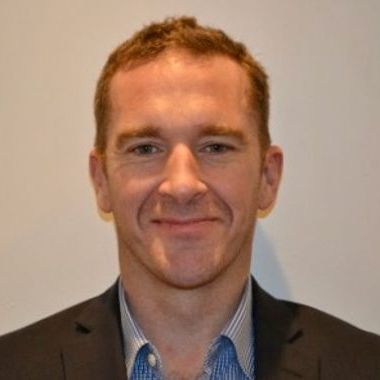
James is a Consultant Spinal Surgeon and Associate Medical Director for Education in Sheffield UK. He is a member of the NOTSS faculty has taught nationally and internationally on surgical non-technical skills and human factors and co-led a review of the NOTSS curriculum.
He also has a research interest in surgeon performance and non-technical skills.