Speakers
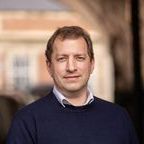
Justin Green

Professor Mohamed Imam
Luke Farrow

Philip Breedon
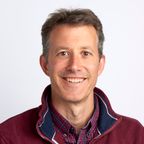
Keynote Presentation
Moderators: Feroz Dinah, Vipin Asopa
(All talks are 7 minutes)
Justin Green – Which Sort of MSK Data Is Amenable to AI Interrogation?
Mo Imam – Multimodal, Large Language and Medical Models (LLMs & MLLMs)
Luke Farrow – Large Action Models (LAMs), Class Imbalance / Hallucinations
Philip Breedon – Humanoid Robotics and AI - A place in the Operating Theatre?
Peter Harris – How does machine learning work?
09:50 – Discussion and Q&A

Justin is the CEO and co-founder of OPCI, a MedTech startup using AI to support elective surgery. He previously trained as an orthopaedic registrar and clinical data scientist, combining hands-on clinical expertise with a deep understanding of data-driven healthcare innovation. He was awarded a National Clinical Research Fellowship in 2022, exploring the application of digital technologies in determining longitudinal outcomes in hip surgery and is currently reading for a PhD in Artificial Intelligence at Newcastle University, where his interests lie in ethics and responsible application of AI in healthcare. Justin co-leads the Musculoskeletal interest group at The Alan Turing Institute and continues to act as a Clinical Safety Officer in addition to contributing to the NortHFutures Digital Skills collaborative, supporting education and training of health and social care professionals in digital technology across Northeast England.

Professor Mohamed A. Imam MD, MSc (Hons), D.SportMed, PhD, FRCS (Tr & Orth) is Clinical Lead for Trauma and Consultant Upper Limb & Complex Trauma Surgeon at the Rowley Bristow Orthopaedic Centre, Ashford and St Peter’s Hospitals, and Professor of Digital Health and Medical Director at the Smart Health Centre, University of East London.
He integrates artificial intelligence and machine learning into orthopaedics—particularly predictive modelling for sports injuries—and has authored over 120 peer-reviewed publications alongside editorial roles with leading journals.
He has edited two Springer Nature reference books on shoulder and elbow trauma and currently editing a book on Transformative Digital Health. He co founded the OrthoGlobe Collaborative and serves in many national and international roles.
His recognition includes multiple awards from AAOS, ISAKOS, AO, EFORT and NHS, and he serves in the GMC in assessment and examination roles.
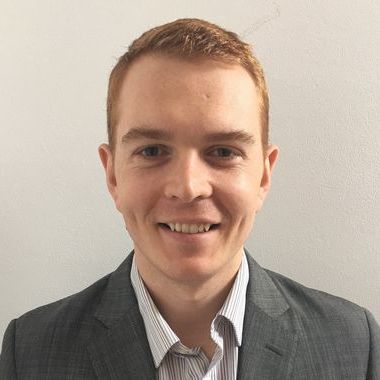
Mr Luke Farrow is a Clinical Academic and Honorary Senior Orthopaedic Trainee based in Aberdeen, Scotland. He is currently taking time out of his clinical training to undertake a CSO Funded Clinical Academic Fellowship exploring how to make improvements in the clinical care pathway for those awaiting hip and knee replacement through the use of artificial intelligence techniques.
He has particular research interests in the use of routinely collected healthcare information, including novel data sources and clinical application of artificial intelligence methods to Trauma and Orthopaedics. He is the current chair of the Scottish Hip Fracture Audit Quality Improvement and Research Sub-Group and a member of the steering committee for the Bone and Joint Infection Registry.
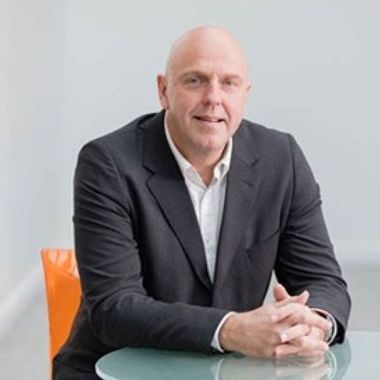
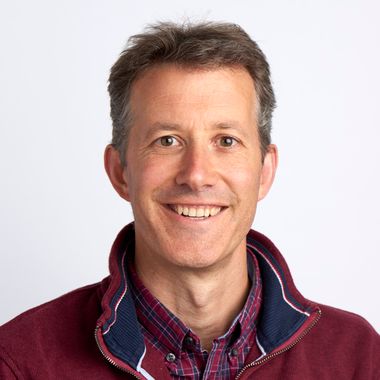
Peter Harris is the Director of Research Science at NielsenIQ, where he leads a global team of Artificial Intelligence researchers. NielsenIQ is a multinational company dedicated to understanding consumer behaviour worldwide. In addition to his role at NielsenIQ, Peter serves as an AI consultant for the NHS, leveraging advanced AI techniques to predict medical conditions from x-rays before they are visible to the human eye. His expertise spans several cutting-edge domains, including Natural Language Processing, Image Classification, Graph Neural Networks, and Generative AI (in collaboration with Microsoft).