
The changing face of orthopaedics: Waiting lists, productivity and planning for the future
Author: Andrew Dunn
The changing face of orthopaedics: Waiting lists, productivity and planning for the future
Andrew Dunn is a Consultant Orthopaedic Surgeon at West Suffolk NHS Foundation Trust specialising in hip and knee arthroplasty. He is Clinical Director of the Essex and Suffolk Elective Orthopaedic Centre (ESEOC), Orthopaedic Surgery Deputy Workstream Lead for GIRFT and Regional Orthopaedic Clinical Improvement Lead for the East of England. He has a particular interest in elective recovery, surgical hubs, clinical leadership and improving productivity while maintaining high-quality patient care.
The post-pandemic orthopaedic landscape presents a paradox. Demand has never been higher, yet the system designed to deliver care remains under unprecedented strain. Waiting lists remain stubbornly high, workforce morale is fragile, and expectations around productivity continue to rise. Against this backdrop, a fundamental question emerges: Can orthopaedics reduce waiting lists without compromising training, outcomes or workforce morale? This is not simply a surgical challenge. It is a test of our values as a specialty.
Recovery is about more than waiting lists
The pandemic exposed structural inefficiencies that had long been tolerated. Despite increased investment and staffing, productivity declined and waiting times increased. In many areas, poor utilisation, outdated systems and inefficient pathways became accepted as normal. Recovery therefore cannot simply be about doing more. It must be about doing things differently1. Orthopaedic surgery carries a particularly heavy burden. Seventeen million people in the UK live with musculoskeletal conditions, representing almost a third of the population. The scale of unmet need is immense.
Yet recovery is about more than reducing waiting lists. It is about restoring standards, pride and purpose within our services. It is also about restoring educational opportunities that were significantly disrupted during and after the pandemic. When services function effectively, clinics run efficiently, theatre lists are productive and patients move through pathways smoothly. Outcomes improve and staff morale follows. Conversely, inefficiency breeds frustration, disengagement and ultimately poorer care. The challenge facing trauma and orthopaedics (T&O) is therefore broader than elective recovery alone. It is about creating a system that delivers high-quality care while remaining sustainable for the workforce that provides it.
Productivity and quality: Can we deliver both?
The traditional view that productivity and quality exist in opposition is increasingly outdated. Patients rightly expect timely access to high-quality care. Delays in referral, diagnosis and treatment have become some of the most common causes of dissatisfaction. In this context, improving productivity is not simply an organisational objective; it is fundamental to patient care.
There remains considerable variation in performance across the NHS. Some clinicians consistently deliver efficient, high-volume clinics that run on time, are well prepared and provide a positive patient experience. Others struggle to achieve similar outcomes. This is not solely an issue of individual performance. It reflects pathway design, expectations, accountability and culture. The GIRFT programme has repeatedly demonstrated that reducing unwarranted variation improves both productivity and quality. Standardised clinic templates, improved referral triage and streamlined pathways are not mechanisms to increase pressure on clinicians; they are tools that allow capacity to be used more effectively.
Importantly, patient concerns have shifted. Complaints are increasingly centred on access rather than consultation quality. Patients are frustrated by delays in obtaining appointments, navigating musculoskeletal pathways and waiting for surgery. Failing to improve productivity has clinical consequences for patients, their outcomes and experience. The opportunity lies in redefining productivity not as the number of patients seen, but as the number of patients who receive the right care, at the right time and in the right place. Where pathways are aligned, productivity and quality reinforce one another. Where they are not, services risk delivering neither.
Outpatient transformation: Unlocking hidden capacity
Much of the discussion around elective recovery focuses on our operating theatres. However, a significant proportion of orthopaedic capacity is lost at the front end of the pathway. Variability in referral triage, unnecessary follow-up appointments and missed attendances continue to consume valuable clinical time. There is substantial opportunity to create capacity in outpatients without increasing workload.
Improved triage processes can ensure patients are seen by the right clinician, in the right subspecialty, with appropriate investigations completed in advance. This reduces duplication and allows decisions to be made more efficiently. Reducing DNAs through improved communication, digital engagement and more flexible booking systems also offers significant potential benefits.
Perhaps the greatest opportunity lies in reducing unnecessary follow-up appointments. Traditional models of routine review have generated large volumes of low-value activity. Patient-initiated follow-up (PIFU), when supported by appropriate safety-netting, allows patients to access care when required while avoiding appointments that provide little clinical value.
Elective recovery therefore depends as much on transforming outpatient pathways as increasing productivity in our operating theatres. Without addressing these inefficiencies, attempts to improve productivity risk simply shifting pressure elsewhere within the system.
Training in the era of efficiency
The impact of the pandemic on training in T&O has been profound. National eLogbook data suggest that elective training activity remains significantly below pre-pandemic levels, with approximately 19% fewer elective procedures performed by trainees. This raises an important concern.
‘No training today, no surgery tomorrow’
Training cannot be viewed as a competing priority. It is a fundamental to a sustainable T&O service. At the same time, broader service pressures are changing how trainees work. Increasing reporting requirements and changing patterns of service delivery mean an increasing number of orthopaedic trainees are working on full-shift rotas. While this improves responsiveness to trauma demand, it can reduce continuity of care and limit exposure to elective surgery. Outpatient transformation creates further tension. As clinics become more efficient, there is a risk that trainees are excluded in the pursuit of productivity or included without sufficient opportunity to develop independent decision-making skills. Yet outpatient clinics remain a vital educational environment. Diagnostic reasoning, communication skills and risk stratification are all developed in the outpatient setting and cannot be learned in theatre alone. Protecting these opportunities is essential.
The role of surgical hubs
Surgical hubs have become a critical part of elective recovery. When implemented successfully, hubs provide ringfenced elective capacity, standardised pathways and improved efficiency. They also reduce disruption caused by urgent and emergency care pressures2. The GIRFT programme has highlighted the benefits of high-volume elective centres and clinically led pathway standardisation, infrastructure alone is insufficient. Success depends upon leadership, collaboration and a genuine commitment to protecting elective capacity. Across England, centres such as SWLEOC (South West London Elective Orthopaedic Centre), South West Ambulatory Orthopaedic Centre (SWAOC) and Northumbria’s hub in Hexham have demonstrated that elective surgical hubs can consistently deliver improvements in productivity and outcomes.
Low-volume, high-complexity procedures such as revision arthroplasty have traditionally been performed at large acute trusts. Increasingly, however, these organisations face capacity constraints driven by urgent and emergency care and trauma pressures. In response, centres such as the Essex and Suffolk Elective Orthopaedic Centre (ESEOC), SWLEOC, the Royal Orthopaedic Hospital and the Royal National Orthopaedic Hospital have evolved into major revision centres, providing enhanced facilities and genuinely protected capacity for complex surgery. These centres also offer unique training opportunities, allowing trainees to gain experience in complex surgery that would otherwise be difficult to access. The GIRFT and Royal College of Surgeons Surgical Hub Accreditation Programme represents an important step forward. Accreditation ensures that hubs are not simply high-volume environments but centres of standardised, high-quality care with governance, outcome monitoring and training embedded into their design.
ESEOC: A case study in collaboration
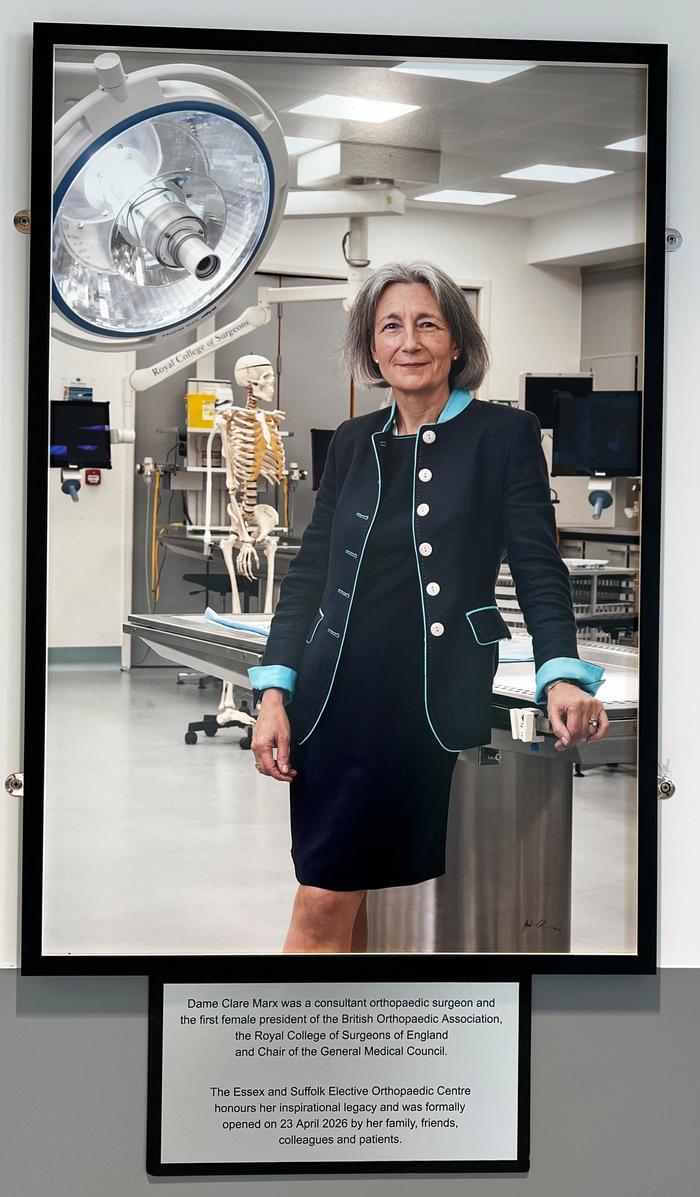
The Essex and Suffolk Elective Orthopaedic Centre (ESEOC) demonstrates what can be achieved when system collaboration is combined with strong clinical and operational leadership. Established to tackle the elective backlog across Suffolk and Northeast Essex, ESEOC brings together more than 60 consultant orthopaedic surgeons from multiple organisations within a dedicated elective hub. Since opening in November 2024, the centre has treated more than 9,000 patients. Standardisation, transparency and collaborative working have helped improve theatre utilisation while reducing length of stay. Importantly, ESEOC was designed from the outset as a training centre as well as an elective orthopaedic centre. Educational opportunities for orthopaedic trainees were recognised as essential to the long-term sustainability of the service. The centre is located within the Dame Clare Marx Building at Colchester Hospital. Naming the facility after Dame Clare reflects the values upon which it was built: clinical excellence, leadership and a commitment to improving patient care through collaboration.
Protecting trauma services
Elective recovery cannot be viewed in isolation. The same workforce that staffs elective hubs also delivers trauma care. There is therefore a real risk that elective expansion could destabilise trauma services if workforce planning fails to recognise this dual responsibility. The team at West Suffolk Hospital demonstrate that both objectives can be achieved. Through realistic job planning and system-wide coordination, it is possible to maintain high-performing trauma services while contributing to elective recovery. Their team continue to deliver an exemplar hip fracture service achieving Best Practice Criteria in 97.2% of cases, with 94.2% of hip fracture patients receiving surgery on the day or day after admission. Elective recovery cannot be considered a success if it comes at the expense of trauma care.
The independent sector: Opportunity and challenge
The independent sector has played an important role in supporting elective recovery and is likely to remain an important partner in the future. However, its growth raises important questions. Independent providers are generally best suited to lower-risk, high-volume procedures. As a result, NHS hospitals increasingly manage a disproportionate share of complex patients with greater comorbidity and higher resource requirements. This concentration of complexity has implications for finances, workforce pressures and service sustainability. It also creates important training challenges, as routine elective procedures remain essential for developing surgical experience. Recent commissioning decisions have highlighted further fragility within the system, with local variation in access to independent sector capacity creating differences in waiting times between regions. The independent sector is an important part of the solution, but it cannot replace a sustainable NHS-led elective orthopaedic service3.
Wellbeing of our workforce matters
Wellbeing of our workforce remains one of the most important but under-recognised determinants of service performance. The BOA Burnout and Wellbeing Survey highlighted the scale of the challenge, with around 40% of respondents meeting criteria for burnout and many others considered at risk. A system that focuses exclusively on throughput without supporting professional fulfilment will ultimately fail. Improving efficiency, reducing frustration and restoring professional pride are not separate from productivity. They are fundamental to it. A motivated and engaged workforce remains the foundation of sustainable elective recovery.
Looking ahead
Future T&O services must:
- Reduce unwarranted variation.
- Use data to drive clinically led improvement.
- Integrate training into elective hubs.
- Protect trauma services.
- Focus on outcomes rather than activity alone.
- Align independent sector capacity with wider system priorities.
- Invest in prevention and musculoskeletal health.
Conclusion
Can T&O reduce waiting lists without compromising training, outcomes or workforce morale? The answer is yes, but only if we stop treating these as competing priorities. Productivity should not compromise quality. Efficiency should not exclude training. Elective recovery should not undermine trauma services. The challenge lies not in whether this can be achieved, but whether we are willing to design services that deliver all three.
T&O has always been a specialty defined by innovation, collaboration and an unwavering commitment to improving patients’ lives. The same qualities that enabled us to overcome the challenges of the pandemic now provide an opportunity to reshape our services for the better. If we embrace that opportunity, elective recovery will become more than a response to waiting lists. It will be a catalyst for creating a more efficient, more sustainable and more fulfilling future for our patients, our trainees and our specialty. ‘The changing face of orthopaedics’ should not be viewed as a challenge to endure, but as an opportunity to build the specialty we want to leave to the next generation.
References
- Briggs TWR. A National Review of Adult Elective Orthopaedic Services in England: Getting It Right First Time. London: British Orthopaedic Association; 2015.
- Royal College of Surgeons of England. The Case for Surgical Hubs. London: RCS England; 2022.
- McNally S. Surgical hubs need to be ringfenced within hospitals to prevent patients being left behind. BMJ. 2025;388:r85.