
From surgeon to soldier: My Army Reserve story
By Lt Col. Edward Skinner
Army Reserve Lieutenant Colonel and Trauma and Orthopaedic Consultant at the University Hospitals Plymouth
From leading life- and limb-saving surgery in civilian practice to serving as a Lieutenant Colonel in the Army Reserve, balancing two demanding careers requires commitment, adaptability and resilience. In this personal account, Lt Col. Edward Skinner shares what inspired him to join the Army Reserve, the skills and experiences he has gained through military service, and how the role has enhanced both his professional and personal development. From training at Sandhurst to supporting medical care at the Nijmegen Marches, his blog highlights the unique opportunities, lifelong friendships and sense of purpose that come with serving as an Army Reserve medical officer.
Why I joined
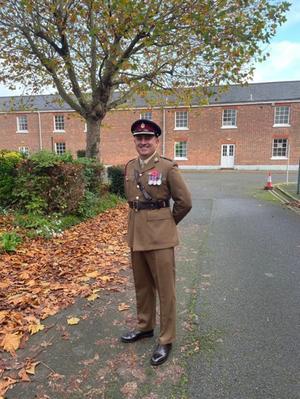
Having spent time at Exeter University Officer Training Corps (UOTC), I knew I enjoyed the military environment. Growing up in a family with a history of military service, combined with my desire to take on an additional challenge alongside my civilian career, inspired me to join the Army Reserve. The military gives me the opportunity to continually push myself mentally, physically and professionally as a clinician.
The application process/training
The application process can take some time, although mine was slightly quicker as I had originally applied for full-time service. I felt the initial medical questionnaire was too stringent as it fails a lot of people that with additional information will easily pass.
My basic training was fantastic. Training at the Royal Military Academy Sandhurst was a real highlight of my journey. I thoroughly enjoyed the experience and only wish I could have spent even longer there.
Positive impact and transferable skills
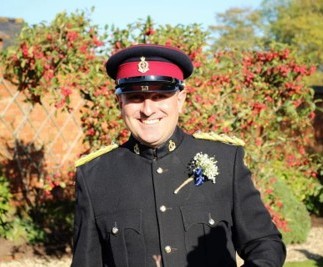
Being in the military, and particularly serving as an officer, has not only improved my confidence but has also strengthened my leadership and decision-making skills. I had the privilege of attending the Army's Staff College, where I completed a Command and Staff Course and gained a qualification in Leadership and Management.
The leadership experience I've gained through the Army has been invaluable and directly transferable to my civilian role as an orthopaedic surgeon, where effective communication, teamwork and calm decision-making are essential.
Balancing civilian and military commitments can be challenging, particularly when both roles are demanding. I am fortunate to have a very understanding employer and supportive family. Likewise, the Army recognises that Reservists must balance military service with civilian careers and family life, allowing me to maintain that balance while continuing to contribute effectively.
Exercise, sport and adventurous training
The Army encourages everyone to maintain a high level of physical fitness, with access to excellent facilities, including free gym membership. There are also opportunities to take part in adventurous training, which for me has included kayaking, dinghy sailing and gaining my Summer Mountain Foundation qualification.
One of the great benefits of Army life is the chance to experience sports and activities I might never otherwise have tried, including archery, climbing, mountain biking and horse riding.
Your unit and the future
The best bit about my unit is the people. I have made friends for life, and I think of them as my second family.
My military involvements have been quite varied. Most recently, I used my medical skills to provide real life clinical support during the Nijmegen Marches. I have also completed my range qualifications, enabling me to coach and supervise training on military firing ranges.
As a Consultant Orthopaedic Surgeon, my military role closely mirrors my civilian practice, providing life- and limb-saving orthopaedic surgery whenever required. Depending on the scale and nature of an operational deployment, I may also serve as the first assistant to a General Surgeon for non-orthopaedic procedures, demonstrating the flexibility required of military medical personnel.
Service in the Army Reserve also means accepting that deployments are a real possibility. Depending on operational requirements, deployments may take place in the UK or overseas and typically last between three and six months. Maintaining both military and clinical readiness ensures I am prepared to deploy whenever required.
Looking ahead, I would like to become more involved in trauma care and how it is delivered throughout the Army and NATO. I also aim to continue to support and develop in a more senior management role, building on my recent promotion to Lieutenant Colonel.
Although recent changes affecting the Reserve Forces are still being communicated, our commitment remains unchanged. Alongside my civilian practice, I will continue to train regularly to maintain both my military and medical competencies, ensuring I am ready to respond wherever the Army requires me.
Find out more at www.army.mod.uk/learn-and-explore/about-the-army/corps-regiments-and-units/royal-army-medical-service.