
Research in retirement
By Michael Beverly
Retired Orthopaedic Surgeon/PhD Student
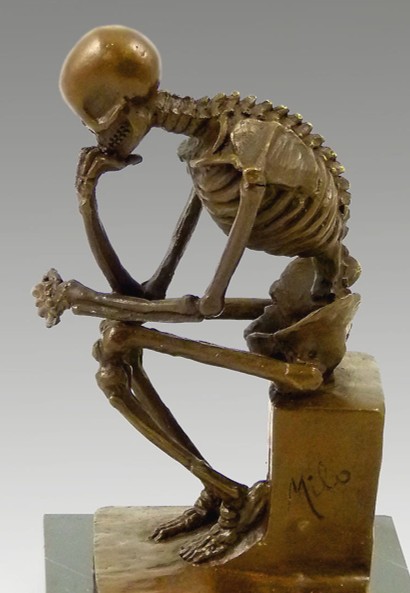
The big idea
Finished at last. But maybe still doing a few private cases or medical reports?
No need to entirely stop, but surely something caught your imagination during all those decades in orthopaedics? Maybe you wondered about an operation that you were doing or what the outcome was of some of your stranger cases? You may have a pet theory or irritation that you would like to test? Or anatomy you would like to prove? It is just possible that all that experience produced an original idea or widget or even that you just want to look at the history of something curious? It is never too late – but where to start?
Advice
Struggling away alone in your office or garage with a solo project is less than likely to succeed. Perhaps it is better to be humble(!) and for a change, seek advice. Seek it frequently. There are plenty of sources. Your hospital is almost certainly associated with a university or even orthopaedic, medical or drug company. As a senior physician you should be able to invite yourself to a discussion with a head of department who can offer appropriate advice and encouragement. But if they are not encouraging, do not give up – look elsewhere. There will be a competing university or department down the road. Of course, all institutions are beavering away at their own line of research. You may even find that interesting and be able to latch on and assist, then later divert into a side show which you find more worthwhile. Departments are usually grateful for experienced clinicians to be around to assist with some teaching, anatomy demonstrating, assisting or maybe even a clinic!
Conferences are perhaps the best way of meeting several senior colleagues and department heads in one place but it is always best to contact great men’s secretaries beforehand. Try to avoid becoming just an unpaid cog in their machine, unless there is clear daylight at the end for you to achieve your own thing.
Department
You should join a department, but not necessarily an orthopaedic department. They will have the space, expertise, kit, secretarial and computing resources to support you. Unless you have kept up to date with computers generally and Word, Excel, PowerPoint, reference software such as Endnote, literature searches, statistics or their equivalent, you may well struggle. Academic departments usually provide training and support courses, especially at the beginning of academic terms, to help you get going. Surprisingly, even your junior colleagues, born and brought up on computers, will be facing a learning curve in some areas. On the whole, most people like being asked occasionally for their advice, especially if they are able to say something useful.
Money
Of course, money lies at the root of everything. You may well find that life as a part time student or researcher for a few days a week in a clinic or lab is a lot cheaper than playing golf. Full fees for bench or desk space can be prohibitive – but some flexibility on your part, perhaps teaching, mentoring or assisting may be the way forward. ‘Hot desking’ though initially frightening, is becoming more frequent, as is working remotely or from home. Proper serious full-time academics seem to spend at least half their lives in soul-destroying funding applications. Post-financial crash, post-Brexit and post-Trump, funding is becoming increasingly difficult. So, avoid going there in the first place. Unless you have Bill Gates’ personal phone number, full time salaries are unlikely to come your way. Maybe a well supported seed grant or starter is more realistic. Most departments have staff whose job it is to keep grant applications running, so latch on to them if available. Even where grants are obtained, there is usually a very long lead-in time, often of many months to a few years. Ethics applications can also drag on forever. It is best to be attached to a group who have broad approval for ethics or Human Tissue Act agreement already in place. You are better advised to join a department with a formal student, associate or honorary position so they do not have to pay your salary or obtain ethics before you can start. Kit is ridiculously expensive and no one is going to buy you an MRI scanner or electron microscope but you may well be allowed a few hours a week to use their fancy machine, whatever it is – especially if you in return are somehow helping them. Actual material costs, for example for computing software or histology, are generally not too daunting, especially if obtained through a University Department.
Have a plan
It is probably a good idea to start by applying for a formal course of some sort. Diplomas such as the DHMSA, MS, MCh, MPhil, PhD, DPhil and no doubt others may give you a foot in the door of proper institutions where support is then available for your idea to flourish.
Appraisal
Appraisal may have driven you mad and often appears to have been a complete waste of time. Many of us retire early just to avoid that type of hassle. But be slow to walk away entirely as it is very difficult to return, should you wish to do so, somewhere down the line. Honorary attachment to your previous or new department may be possible without too much stress and will allow for continuing appraisal and revalidation under their umbrella, rather than from out in the cold and all on your own.
Holidays
The life of a regular orthopod may have been fairly frantic without a minute to relax. Academia usually runs at a more reasonable pace. No weekends or night calls. More coffee and water-cooler moments. Many of your fellow (young) academics will be getting married, starting families, trying for mortgages and so on. It can be a real pleasure to associate with optimistic and intelligent beings less than half or a third of your age. You have the advantage of decades in the NHS so the present and ever-worsening strife that they face may be seen from a longer, calmer point of view. Academic terms allow for busy winters with less arduous summers and often pleasant ‘conference seasons’ at both ends.
Publications
The world has changed in that there is a profusion of lightweight journals whose readership is close to nil but who will want hefty ‘open access’ publication fees. Plagiarism checking of all submissions is routine! ChatGPT will be of little help but may offer you a starting ‘outline’. Worthwhile publications will require departmental advice and support but some frustration is inevitable. Relax, re-read the reviewers comments and the instructions to authors, and try again elsewhere. Conferences, save for the wonderful current exception of the BOA, may be very expensive. If your abstract is accepted there are often departmental funds to ease the pain.
Patents
Definitely not one to go it alone. All universities have departments whose role is to support original ideas and ‘spin-out’ companies. Patenting is extremely expensive and always better paid for by the institution. If wealth is still your primary aim in life, there are easier ways to succeed. Much the same applies to your upcoming book. A publisher will usually be happy to advise.
Advantages
Most of us benefit from a reason to get up in the morning to do something useful and to liaise with other people. Research does not have to be full-time and it is very satisfying to learn new skills in a congenial group. You may even fend off cerebral and physical decay for a while. There will still be time for that trip to the Galapagos or to start beekeeping. And speaking of travel, the developing world always needs surgeons, the more broadly trained, the better. Obviously you will go as an observer or assistant on your first mission. It is better to take a longer view and visit or support one area or hospital repeatedly, than to be an ‘adrenalin junkie’ and dot about from crisis to crisis. Bewes and King wrote excellent guides to tropical surgery to help you through your first solo Caesarean or hernia repair1.
There is a natural cycle to the academic year, quite different to the ceaseless slog of clinical life. It will come with a new set of colleagues and interests, perhaps some subsidised travel and who knows – even a real advance to benefit the rest of us patients. Why not have a try?
So what did I do?
For many years an idea was nagging away at the back of my mind. How do joints actually work? A brief PowerPoint presentation was prepared and touted round various university departments. Only Oxford was interested. They suggested that enrolling for a research degree was the way forward. Fifty pounds was the application fee. An interview followed and a college was assigned. University and college fees were required. But with those comes a huge range of opportunities, contacts and assistance. I moved departments, bench spaces, software and targets, but remained on the DPhil track. Publications were a struggle and still are, but here are a couple so far and, maybe one day, a book will follow2-6?
References
- King M, Bewes P, Cairns J, Thornton J. Primary surgery. Vol. 1. Non-trauma. Oxford University Press, 1990.
- Beverly M. The Role of Subchondral Circulation in the Physiology of Load Transmission [DPhil in Musculoskeletal Science]. Oxford: University of Oxford; 2019.
- Beverly M, Murray DW. Walking on water: subchondral vascular physiology explains how joints work and why they become osteoarthritic. EFORT Open Rev. 2023;8(6):436-42.
- Beverly M, Marks BE, Murray DW. Subchondral pressures and perfusion during weight bearing. J Orthop Surg Res. 2020;15(1):239.
- Beverly M, Stamm G, Hamilton TW, Murray DW, Pandit HG. Upper tibial MRI vascular marks lost in early knee osteoarthritis. J Orthop Surg Res. 2018;13(1):281.
- Beverly M, Murray D. Factors affecting intraosseous pressure measurement. J Orthop Surg Res. 2018;13(1):187.